Best studio monitors for small rooms in 2026
Compare seven monitor systems by budget, desk size and workflow, with real product images, pair prices, specifications and practical bedroom placement advice.
A research-based shortlist using manufacturer specifications and US prices checked on 20 September 2026, not a hands-on listening shootout. Awards reflect suitability for the stated setup. All prices cover a stereo pair, before tax and shipping. Buying links have no affiliate tracking.
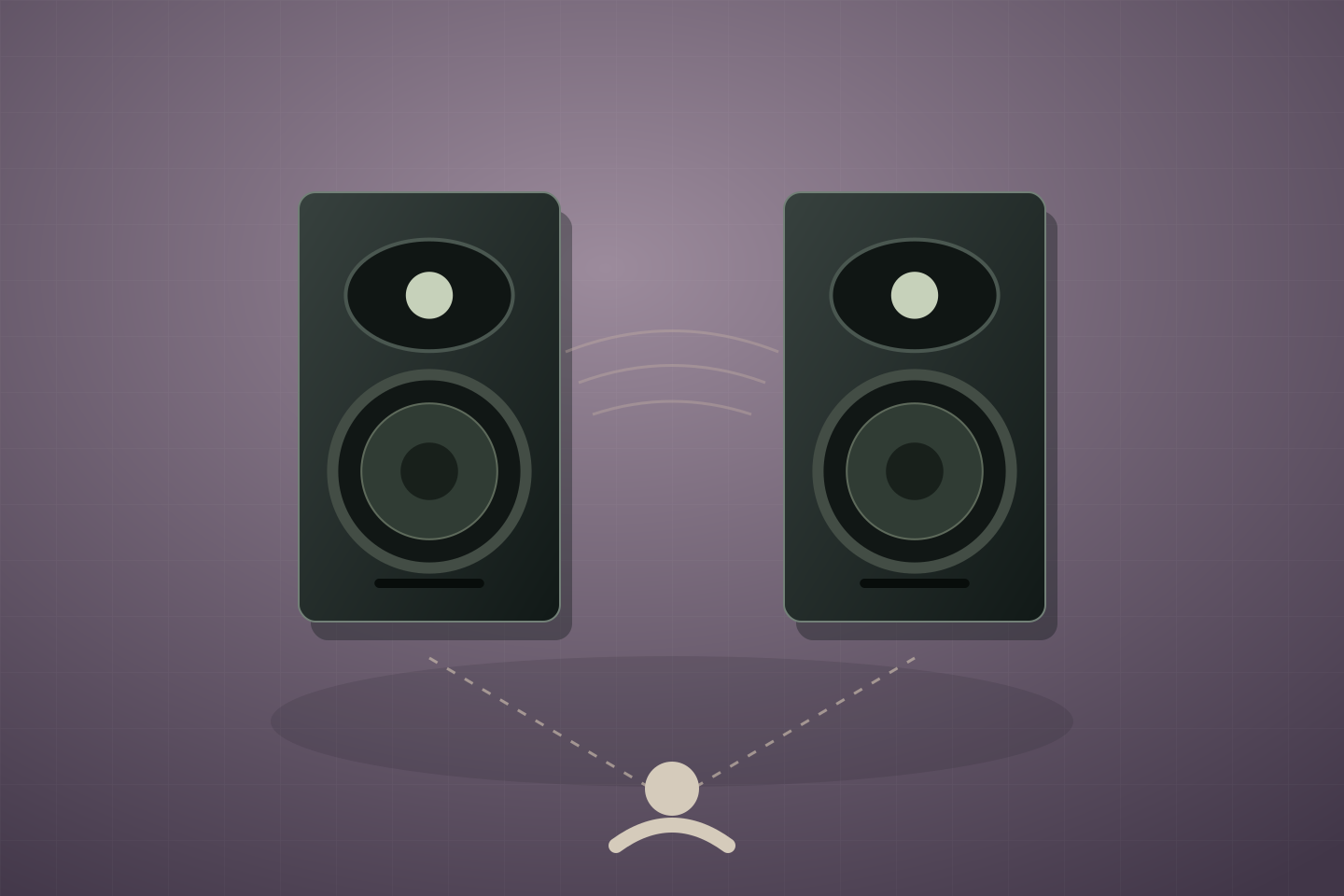
For a bedroom producer, the best studio monitors are the ones you can position properly, connect easily and use at a sensible level. A huge cabinet squeezed into a corner is not automatically an upgrade over a smaller pair arranged well. Start with your available desk space and listening distance, then look at the price.
Our shortlist covers seven systems, from a $99.99 desktop pair to larger $498 monitors. Kali’s LP-UNF is our overall desktop recommendation, ADAM’s D3V suits a narrower workspace, and the current JBL 305P MkII sale is the value pick. Each solves a different practical problem; none can make an untreated room disappear.
Choose by the space you actually have
Compare the seven systems
Scroll the table to see every specification →
| Monitor system | Woofer | Size per speaker | Inputs | US price |
|---|---|---|---|---|
| PreSonus Eris 3.5 · 2nd Gen | 3.5 inches | 210 × 141 × 164 mm · H × W × D | Balanced TRS · RCA · 3.5 mm stereo | $99.99 / pair |
| JBL 305P MkII | 5 inches | 298 × 185 × 231 mm · H × W × D | Balanced XLR · TRS | $198 / pair · $99 each |
| IK Multimedia iLoud Micro Monitor | 3 inches | 180 × 90 × 135 mm · H × W × D | RCA · 3.5 mm stereo · Bluetooth | $299.99 / pair |
| Kali Audio LP-UNF | 4.5 inches | 254 × 164 × 186 mm · H × W × D | Balanced TRS · RCA · USB-C · Bluetooth | $349 / pair |
| ADAM Audio D3V | 3.5 inches · side passive radiators | 200 × 115 × 150 mm · H × W × D, without foot | Balanced TRS · USB-C | $349.99 / pair |
| Yamaha HS5 | 5 inches | 285 × 170 × 222 mm · H × W × D | Balanced XLR · TRS | $399.98 / pair · $199.99 each |
| Kali Audio LP-6 V2 · 2nd Wave | 6.5 inches | 359 × 222 × 260 mm · H × W × D | Balanced XLR · TRS · unbalanced RCA | $498 / pair · $249 each |
Dimensions are height × width × depth, rounded where necessary. Leave additional space for plugs, ventilation, ports and stands. Cabinet depth alone is not the complete distance from the wall. Manufacturer response limits are quoted with their tolerance where discussed; they are not a common independent listening test.
Under $200 a pair: start without overspending
PreSonus Eris 3.5 · 2nd Gen
- Woofer
- 3.5 inches
- Size per speaker
- 210 × 141 × 164 mm · H × W × D
- Inputs
- Balanced TRS · RCA · 3.5 mm stereo
- USB audio
- No
- Adjustment
- High and low shelving controls
- Buying unit
- Stereo pair
- Price checked
- $99.99 / pair
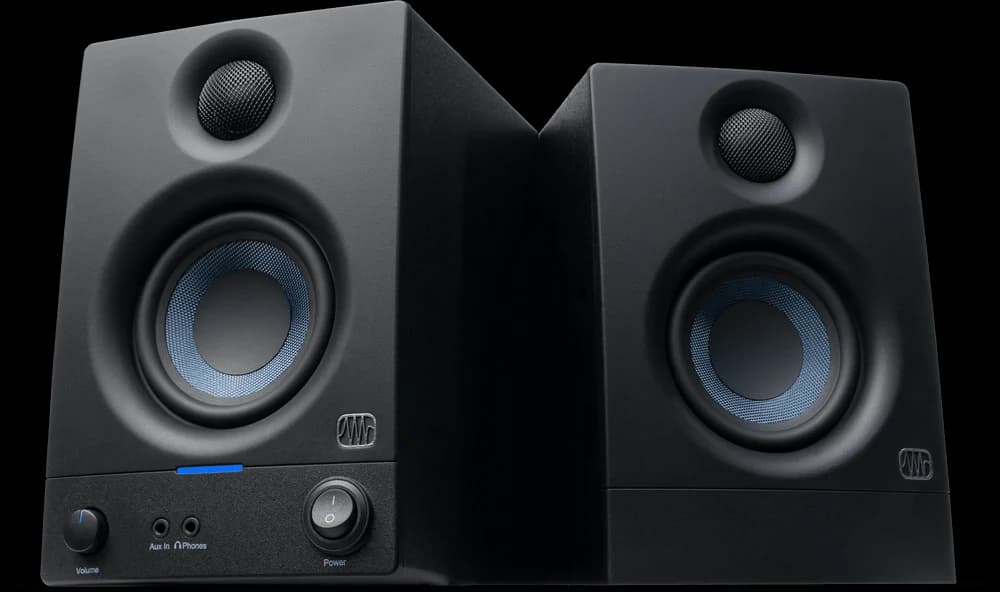
The Eris 3.5 is the entry point when your budget is around $100 for both speakers. Its small cabinet, front volume control and headphone socket suit a shared computer desk. This is the non-Bluetooth second-generation model; the similarly named BT and Studio ranges are different products.
We would use it to start arranging and checking a mix outside headphones. Its compact woofer makes it a limited tool for judging deep bass, so do not keep boosting a sub-bass part because a small speaker cannot reproduce it convincingly. A cheaper pair used thoughtfully can be useful, but it is not a substitute for hearing the low end elsewhere.
- A complete pair below $100
- Balanced inputs alongside consumer connections
- Convenient shared volume and headphone output
Limited deep-bass perspective. Budget for suitable placement rather than expecting the tone controls to correct the room.
Our take: A sensible first desktop pair if the main goal is getting beyond laptop speakers without consuming the whole studio budget.
JBL 305P MkII
- Woofer
- 5 inches
- Size per speaker
- 298 × 185 × 231 mm · H × W × D
- Inputs
- Balanced XLR · TRS
- USB audio
- No
- Adjustment
- Boundary EQ · HF trim
- Buying unit
- Single speaker · buy two
- Price checked
- $198 / pair · $99 each
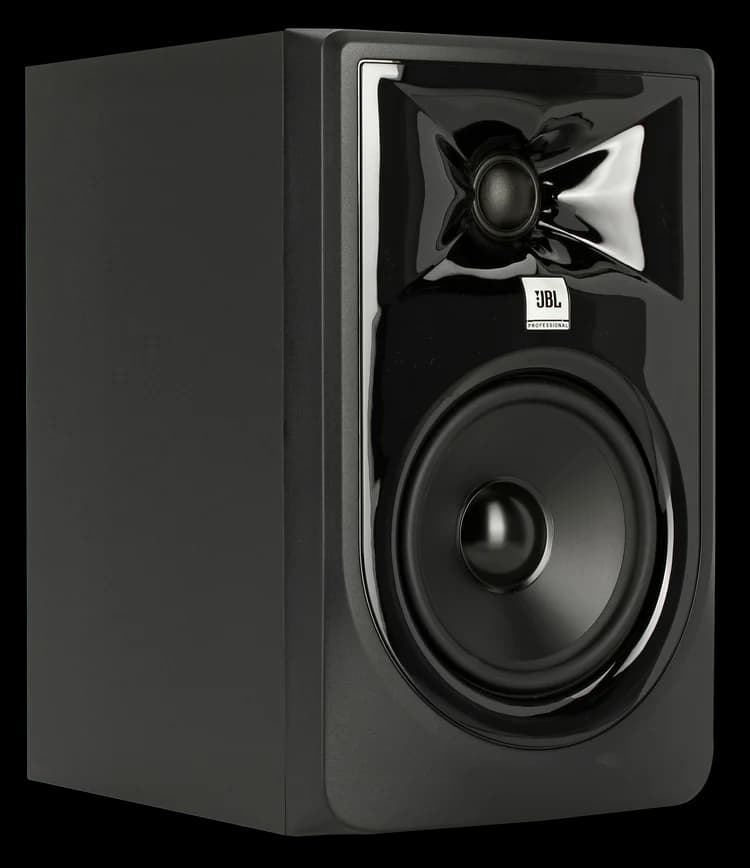
At the checked $99-per-speaker offer, the 305P MkII is a particularly interesting step up from tiny desktop speakers. You get a five-inch woofer, balanced studio connections and rear controls for placement-related adjustments. The retailer listed the offer through 1 October 2026; this value recommendation depends on that price remaining available.
Each cabinet is powered separately, and both need an audio connection. Plan for two speakers, two signal cables and a convenient way to control their combined listening level, normally your interface. These are noticeably bigger than an Eris 3.5 or D3V: mark out the footprint before ordering. The rear port also needs the clearance specified in the manual.
- Strong checked pair price
- Balanced XLR and TRS connections
- Boundary and treble adjustment
The sale is temporary. Two cabinets take more desk space and have no shared front-panel volume knob.
Our take: Our value pick at $198 for two. Recompare the shortlist if the sale has ended.
$299–$350 a pair: compact desk specialists
IK Multimedia iLoud Micro Monitor
- Woofer
- 3 inches
- Size per speaker
- 180 × 90 × 135 mm · H × W × D
- Inputs
- RCA · 3.5 mm stereo · Bluetooth
- USB audio
- No
- Adjustment
- Desktop · low / high EQ switches
- Buying unit
- Stereo pair
- Price checked
- $299.99 / pair
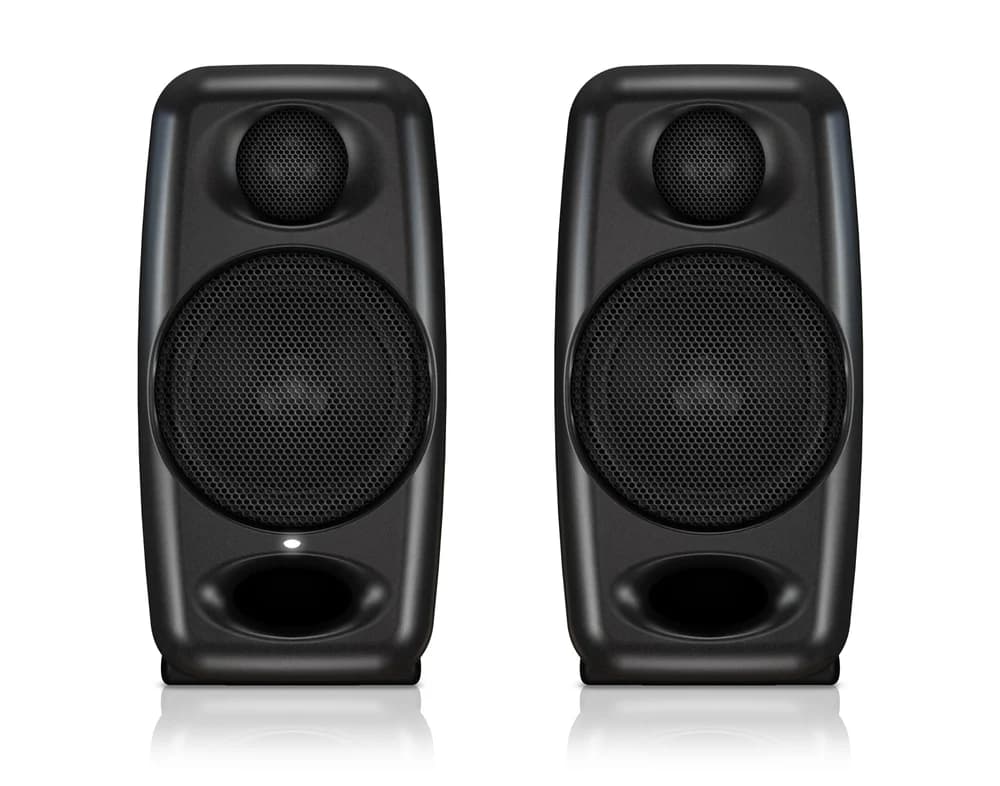
The original iLoud Micro Monitor earns its place through a very small footprint. A pair can make sense for a temporary writing desk or a producer who regularly packs away their setup. Choose it because you need that size, rather than because a three-inch speaker is inherently ideal for every small room.
Analogue inputs are unbalanced RCA and a stereo mini-jack, with Bluetooth for casual playback. Use a wired connection for producing. This is the original Micro Monitor, not the Micro Monitor Pro: the Pro’s features and calibration options should not be attributed to this model. Include its power supply and speaker interconnect when judging how portable the complete system will be.
- Very narrow cabinets
- A pair sold as one system
- Desktop and tonal adjustment switches
No balanced inputs or USB audio. Compact dimensions do not remove bass-output limits.
Our take: Choose this when space and packing convenience are more valuable than conventional studio connectivity.
Kali Audio LP-UNF
- Woofer
- 4.5 inches
- Size per speaker
- 254 × 164 × 186 mm · H × W × D
- Inputs
- Balanced TRS · RCA · USB-C · Bluetooth
- USB audio
- Yes · 24-bit / 48 kHz
- Adjustment
- Placement presets · LF / HF trims
- Buying unit
- Stereo pair
- Price checked
- $349 / pair
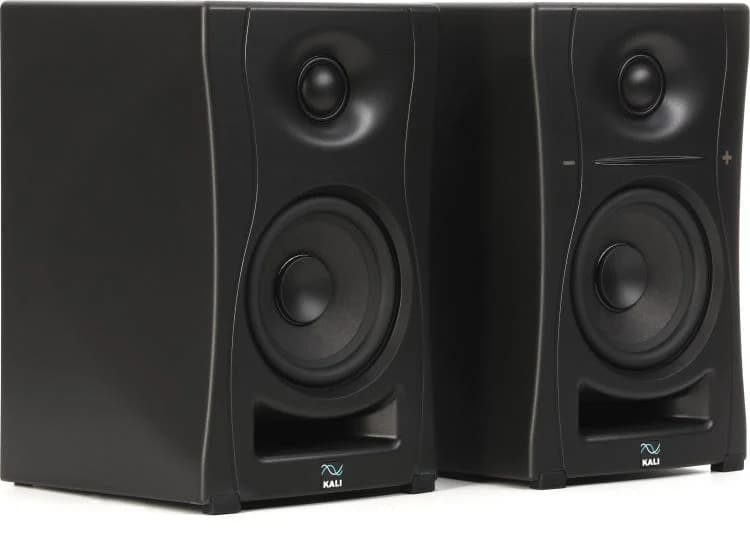
The LP-UNF is our overall pick for a producer working close to the speakers at a compact desk. It combines useful analogue and digital connections with placement settings that explicitly consider desktop use. You can connect it directly over USB-C for an in-the-box setup or use balanced outputs from an interface.
Kali specifies 54 Hz–21 kHz within ±3 dB, with a wider 39 Hz–25 kHz range at −10 dB. Those figures describe different limits; the lower headline number does not mean flat sub-bass playback. The front port and boundary presets help make the design practical, but they do not cancel room resonances or make wall position irrelevant.
- Useful connection choices
- Designed around close desktop listening
- A complete pair at $349
Larger than the D3V or original iLoud Micro. No microphone recording inputs, and room setup still matters.
Our take: The most balanced starting shortlist for a desk that can accommodate its footprint and a producer who wants both USB and interface connectivity.
ADAM Audio D3V
- Woofer
- 3.5 inches · side passive radiators
- Size per speaker
- 200 × 115 × 150 mm · H × W × D, without foot
- Inputs
- Balanced TRS · USB-C
- USB audio
- Yes
- Adjustment
- Position · desk · room switches
- Buying unit
- Stereo pair · angled feet included
- Price checked
- $349.99 / pair
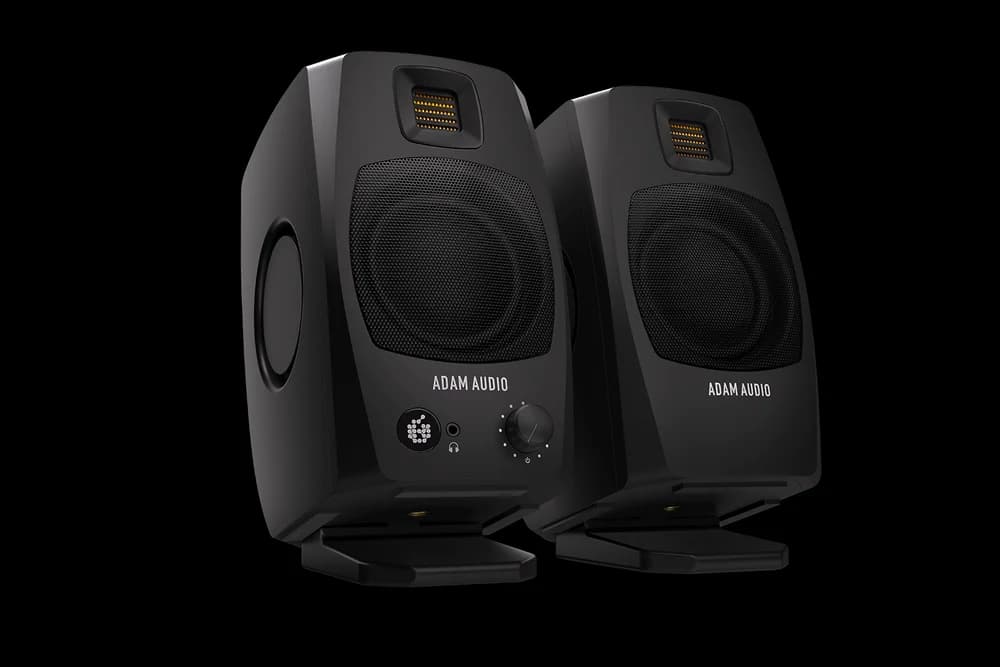
The D3V is a strong alternative when the LP-UNF takes too much width. USB-C, balanced TRS inputs, a front level control and a headphone output make it easy to integrate into a writing desk. The included angled feet are useful when a conventional stand is awkward, although their angle still needs to suit your listening height.
The cabinet is 200 mm tall without the foot and 240 mm with it. Leave the side passive radiators unobstructed rather than squeezing each speaker between objects. ADAM provides separate adjustments for position, desk and room; begin with the manual’s recommendations and change one setting at a time. Compact does not mean that positioning becomes optional.
- Narrow cabinet for crowded desks
- USB and balanced analogue inputs
- Included feet and front headphone socket
Side radiators need space. The small format is intended for close listening rather than filling a large room.
Our take: A practical near-$350 choice when desk width and easy everyday controls drive the decision.
$399–$498 a pair: conventional studio options
Yamaha HS5
- Woofer
- 5 inches
- Size per speaker
- 285 × 170 × 222 mm · H × W × D
- Inputs
- Balanced XLR · TRS
- USB audio
- No
- Adjustment
- Room Control · High Trim
- Buying unit
- Single speaker · buy two
- Price checked
- $399.98 / pair · $199.99 each
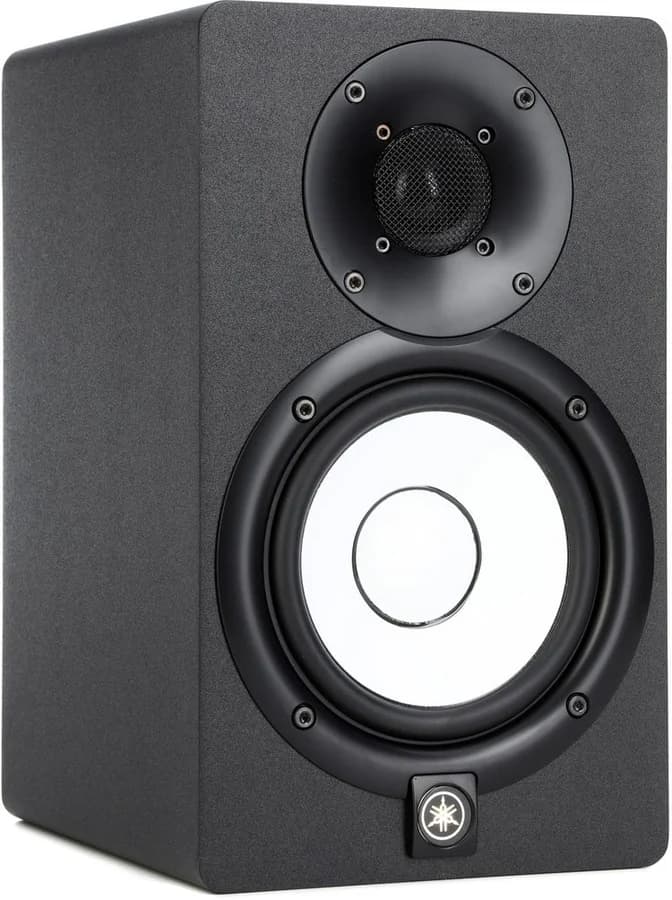
The HS5 offers a conventional interface-to-speakers setup with balanced inputs and simple room and treble switches. It suits someone who wants independent powered cabinets with straightforward controls, and has enough room for their placement. A familiar brand or white cone is not, by itself, evidence that a mix will translate better.
Yamaha lists a 54 Hz–30 kHz range at −10 dB. That should not be read as a flat response down to 54 Hz, or compared directly with another maker’s ±3 dB specification. Check deep bass with another suitable listening reference. At the current prices, the JBL sale pair costs substantially less; the HS5 makes more sense after an audition or when its particular layout and controls suit you.
- Simple rear-panel adjustments
- Balanced XLR and TRS
- Moderate cabinet width
No USB, shared volume knob or deep-sub-bass guarantee. Pair price is twice the single listing.
Our take: A reasonable conventional option, but compare it carefully with the cheaper JBL offer and desktop-oriented USB systems.
Kali Audio LP-6 V2 · 2nd Wave
- Woofer
- 6.5 inches
- Size per speaker
- 359 × 222 × 260 mm · H × W × D
- Inputs
- Balanced XLR · TRS · unbalanced RCA
- USB audio
- No
- Adjustment
- Boundary presets · LF / HF trims
- Buying unit
- Single speaker · buy two
- Price checked
- $498 / pair · $249 each
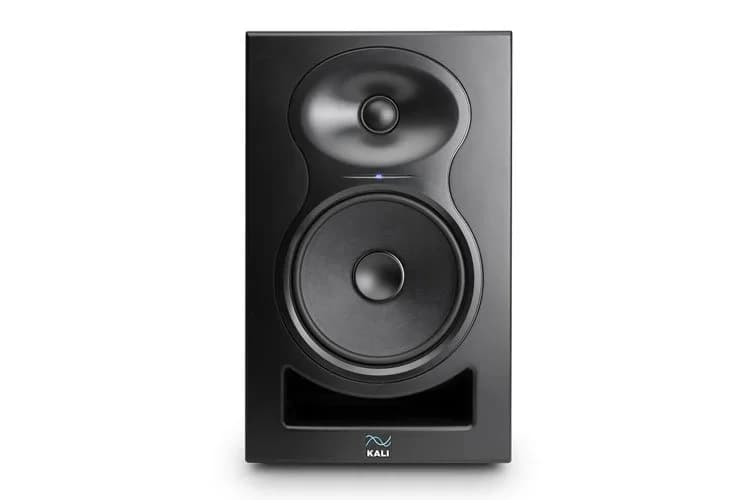
The LP-6 V2 is the biggest cabinet in this shortlist, and belongs here only if your small room still has a sensible speaker position. It offers a 6.5-inch woofer, balanced and unbalanced connections, and boundary presets. This is the second-wave model, not the original LP-6.
Kali specifies 47 Hz–21 kHz within ±3 dB. Compared with the LP-UNF’s published ±3 dB range, it reaches lower, but that does not tell you which speaker will behave better at your desk. At 222 mm wide and 260 mm deep, each cabinet needs real space. Include stands if placing them directly on the desk would compromise your screen or listening geometry.
- Larger woofer and lower published ±3 dB limit
- Multiple placement presets
- Balanced and RCA input options
Largest footprint here. No USB audio, and it does not solve a room problem simply by producing more bass.
Our take: Consider it for a small dedicated production space with suitable stands; pick a smaller system for a crowded multipurpose desk.
Does a small room always need a small woofer?
Room size alone does not dictate a driver diameter. Listening distance, available placement, desired level and low-frequency behaviour all matter. A small speaker can still excite room resonances, and a larger speaker can be useful at modest levels when positioned well. The reason to prioritise a compact cabinet on a crowded desk is practical geometry, not a universal five-inch rule.
Before ordering, mark each cabinet’s width and depth on the desk with paper. Sit in your normal position. Can you put both speakers at a similar distance, aim them appropriately and keep the screen out of the way? If not, budget for supports or consider the narrower models. Buying the larger speaker and hoping the room will accommodate it reverses the useful order.
Do not treat amplifier wattage or the lowest advertised frequency as a single quality score. A −10 dB frequency limit permits much more level reduction than a ±3 dB range. Different measurement conditions also complicate SPL comparisons. We use these specifications to understand a design’s limits, not to invent a sound-quality ranking.
Get the placement right before reaching for EQ
- Start with a roughly symmetrical left/right layout, equal listening distances and the manufacturer’s recommended orientation. Aim the listening axes towards your seat.
- Bring the listening axis to an appropriate ear height, using stable stands or the supplied angled feet where suitable.
- Follow the model’s guidance for wall distance, ports and radiator clearance. Front-ported does not mean immune to wall-related bass changes.
- Use the appropriate desk or boundary setting as a starting point. Change one control at a time while listening to familiar material.
- Check your position as well as the speakers. Bass that changes dramatically when you move is a reason to investigate placement and the room.
Isolation pads can help with support and mechanical coupling in some setups; they do not absorb the room’s bass resonances. Treatment and soundproofing also solve different problems. Begin with layout, then decide whether suitable absorption or a more substantial change is needed. Buying a more expensive monitor is not automatically the next step.
Do you need an audio interface as well?
For a computer-only setup, the LP-UNF and D3V can receive USB audio directly. That does not give them microphone preamps or instrument recording inputs. If you already record through an interface, feeding its left/right line outputs into balanced speaker inputs usually keeps the system easier to manage.
Use cables that match the actual outputs and inputs. A stereo mini-jack and a balanced mono TRS socket can look similar in a shopping description but serve different jobs. For conventional monitors, run one line-level channel to each speaker. Keep listening levels low when connecting or powering up.
Bluetooth is convenient for playing a reference from a phone, but a wired route is the practical choice for recording or playing software instruments. Wireless delay is separate from the DAW buffer. If the sound feels late, check the route before changing the speakers.
Common questions
Should I add a subwoofer straight away?
Usually make the main pair and listening position work first. A subwoofer adds placement, crossover and level decisions; it does not automatically cure weak or uneven bass at your seat. Budget for understanding and integrating the system, not just another box.
Can I make music on headphones instead?
Yes. Headphones are especially useful for recording and shared rooms. Speakers provide another perspective on balance and stereo presentation, but they are not a requirement for beginning or finishing music.
Are these recommendations based on a listening shootout?
No. This is a researched shortlist based on documented dimensions, connections, features and checked prices. We have not measured or auditioned every model together. Audition suitable candidates where possible and use a retailer with clear return terms.
Why is the JBL recommendation so price-specific?
The checked listing was $99 per speaker, with an offer advertised through 1 October 2026. At $198 per pair it is a different value proposition from its regular pricing. Check the live listing before deciding.
Our buying advice
Shortlist the LP-UNF for a compact but usable production desk, D3V when width is tight, and the original iLoud Micro when the whole setup needs to move. Start with the Eris if the budget is very limited. Compare the JBL sale before spending more on conventional monitors, and consider the LP-6 V2 only when you can accommodate it properly.
Keep money for the complete setup and make a purchase that leaves you able to work. The best upgrade is the one you can place well and learn, with enough time spent listening to familiar music to understand what your own mixes need.
Sources & further reading
Original specifications, manuals and price listings used in this guide.
- Genelec: monitor placement principles
- PreSonus Eris 3.5 · 2nd Gen price listing
- JBL product specifications
- JBL 305P MkII price listing
- IK Multimedia specifications
- IK Multimedia iLoud Micro Monitor price listing
- Kali Audio LP-UNF price listing
- ADAM technical data and documentation
- ADAM Audio D3V price listing
- Yamaha specifications
- Yamaha HS5 price listing
- Kali second-wave specifications
- Kali Audio LP-6 V2 · 2nd Wave price listing