Best music production headphones in 2026
Seven studio headphones compared for mixing, recording and value. Explore specs, comfort, repairability, checked US prices and direct buying links.
A research-based buying guide, not a hands-on group test. Recommendations are our editorial assessment of published specifications, design and price. Purchase links are standard links without affiliate tracking.
The best music production headphones are the ones that suit the work in front of you. Recording a quiet vocal, balancing a bass-heavy track and editing on a train ask very different things of the same two earcups.
Our overall pick for a dedicated mixing setup is the Sennheiser HD 490 PRO. For recording, we would start with the beyerdynamic DT 770 PRO X. On a smaller budget, the Sony MDR-7506 remains the lowest-cost entry in this shortlist. Here is how seven options compare, and where spending more actually changes the design you get.
The shortlist
Compare the essentials
Prices are US listings checked on 20 September 2026, before tax and shipping, not live quotes or guaranteed lowest prices. Follow each price to its source. Availability, colours and regional pricing vary. Weights exclude the cable; Sony’s figure is approximate.
Scroll the table to see every specification →
| Headphones | Design | Impedance | Weight | US price |
|---|---|---|---|---|
| Sennheiser HD 490 PRO | Open · dynamic | 130 Ω | 260 g | $429 |
| beyerdynamic DT 900 PRO X | Open · dynamic | 48 Ω | 345 g | $319.99 |
| beyerdynamic DT 770 PRO X | Closed · dynamic | 48 Ω | 305 g | $229.99 |
| Audio-Technica ATH-M50x | Closed · dynamic | 38 Ω | 285 g | From $159 |
| Sony MDR-7506 | Closed · dynamic | 63 Ω | Approx. 230 g | $113 |
| Audio-Technica ATH-R70xa | Open · dynamic | 470 Ω | 199 g | $379 |
| Audeze MM-100 | Open · planar magnetic | 18 Ω | 475 g | $299 |
The manufacturer frequency ranges below use different measurement conditions and do not rank sound quality. A wider printed range does not establish a flatter response, better bass accuracy or better mix translation.
Seven headphones, seven reasons to choose
Sennheiser HD 490 PRO
- Design
- Open · dynamic
- Impedance
- 130 Ω
- Weight
- 260 g
- Published range
- 5–36,000 Hz (−10 dB)
- Cable
- Detachable · 1.8 m
- Price checked
- $429
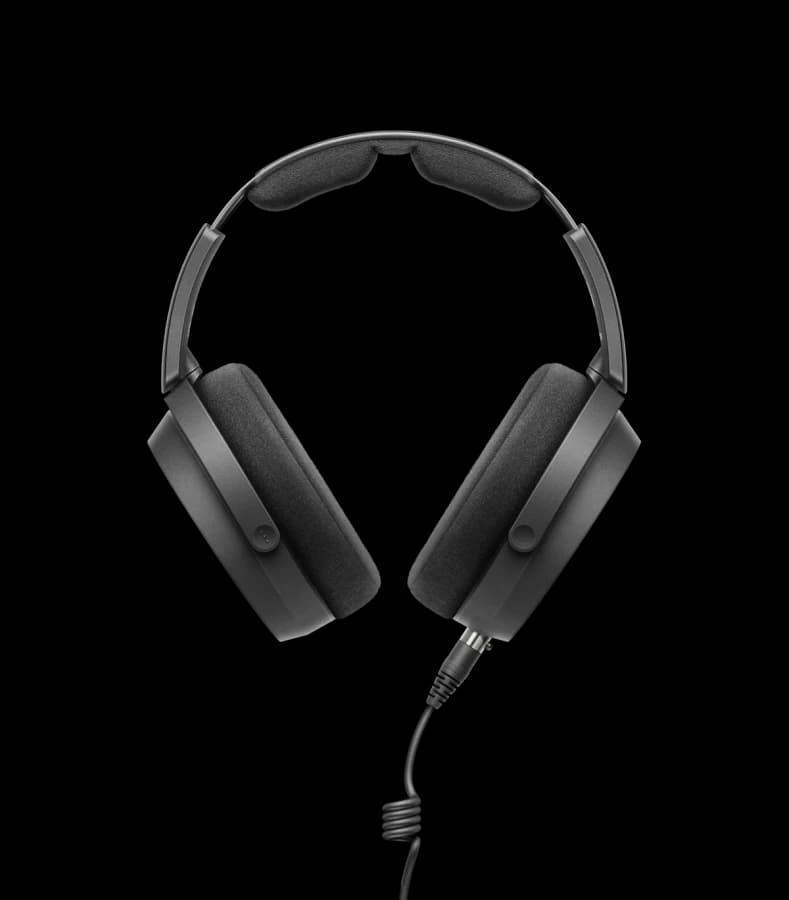
The HD 490 PRO earns our overall recommendation through a useful combination of low weight, serviceable parts and two included pad sets. Sennheiser supplies separate mixing and producing pads; they change the tuning, so choose one and learn it with familiar reference tracks before making critical decisions.
Its 260 g construction is a practical advantage over the heavier open-back options here. Washable, replaceable pads and a detachable cable also make more sense for years of daily sessions than decorative materials. The open earcups mean this recommendation assumes a quiet room without a live microphone nearby.
- Two pad sets included
- Washable pads and replaceable cable
- Relatively light at 260 g
Costs more than the DT 900 PRO X; open backs provide no useful recording isolation.
Our take: Worth the premium if weight and everyday ergonomics matter more to you than the lowest entry price.
beyerdynamic DT 900 PRO X
- Design
- Open · dynamic
- Impedance
- 48 Ω
- Weight
- 345 g
- Published range
- 5–40,000 Hz
- Cable
- Detachable mini-XLR · 1.8 m + 3 m
- Price checked
- $319.99
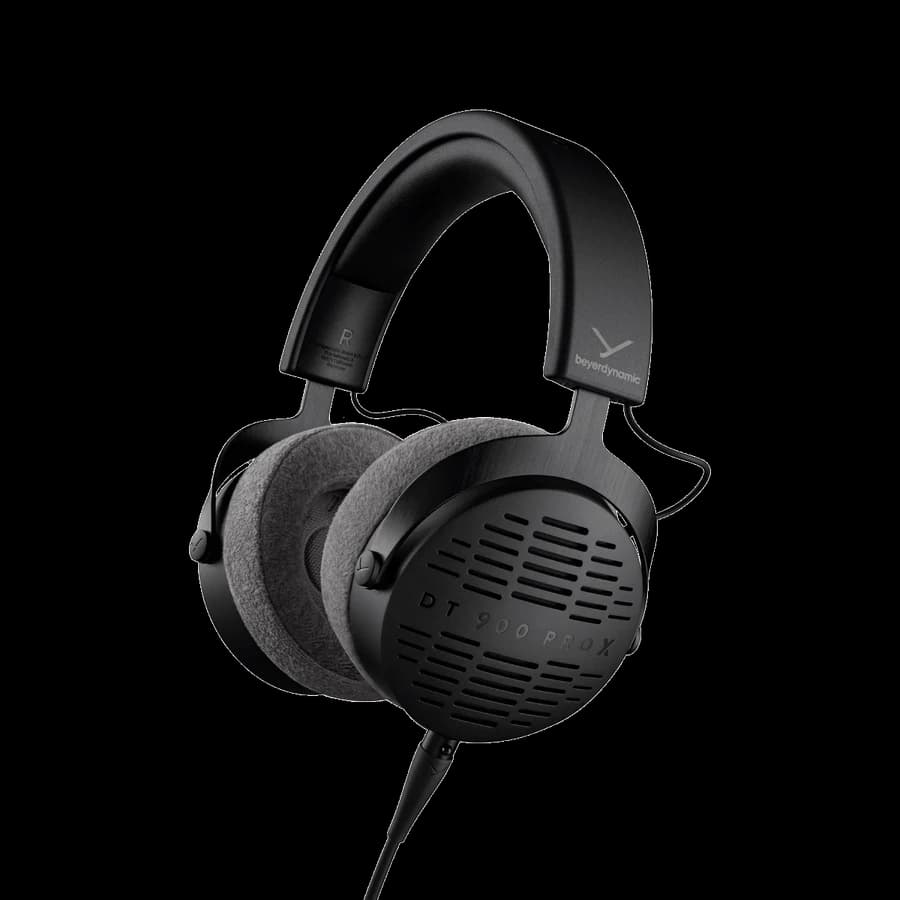
A replaceable headband pad, velour ear cushions and detachable mini-XLR cables make the DT 900 PRO X an appealing long-term studio tool. Two cable lengths are included, which is useful when the same headphones move between a desktop interface and a larger studio desk.
The 48-ohm driver and published sensitivity of 100 dB SPL at 1 mW/500 Hz make it a sensible candidate for an ordinary interface headphone output. That is not a guarantee for every device, but it avoids the higher voltage demand of the ATH-R70xa. At the checked prices, it also undercuts the HD 490 PRO by about $109.
- Replaceable wear parts
- Two detachable cables included
- Practical interface compatibility
At 345 g it is heavier than the HD 490 PRO and ATH-R70xa; it also leaks sound.
Our take: Choose it when repairability and a straightforward wired setup matter more than minimum weight.
beyerdynamic DT 770 PRO X
- Design
- Closed · dynamic
- Impedance
- 48 Ω
- Weight
- 305 g
- Published range
- 5–40,000 Hz
- Cable
- Detachable mini-XLR
- Price checked
- $229.99
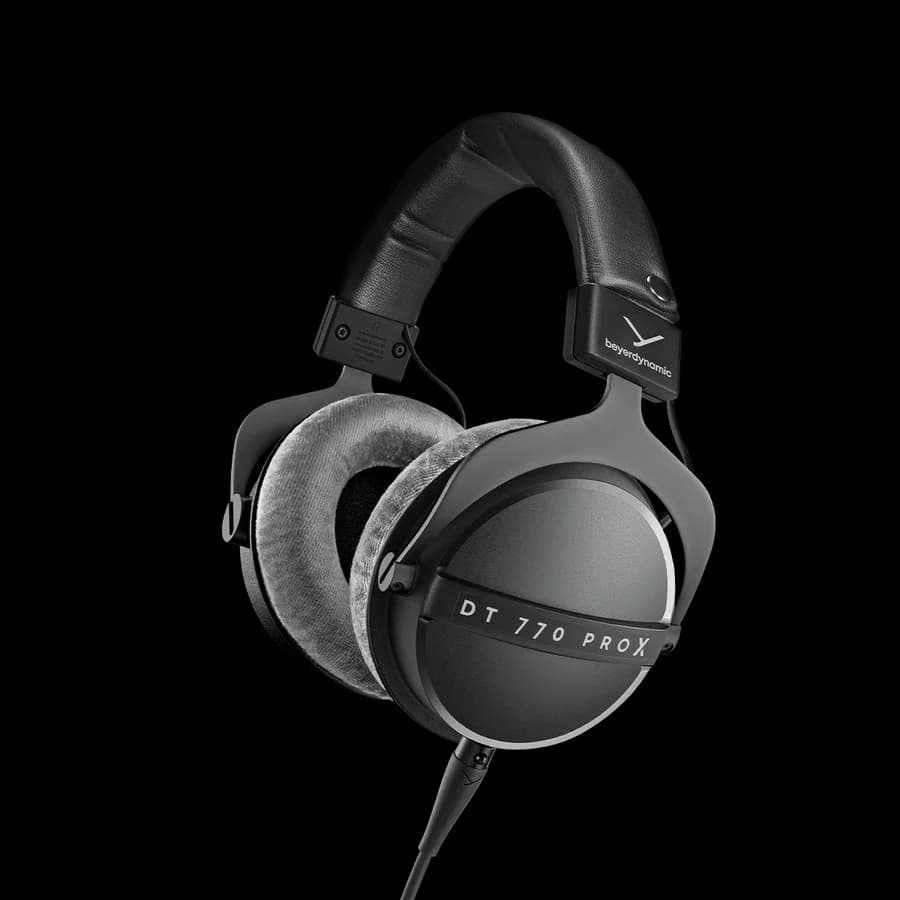
For recording vocals or acoustic instruments, closed earcups are the useful upgrade: they reduce the amount of backing track reaching the microphone. The DT 770 PRO X combines that design with a replaceable cable and velour pads. This is the current 48-ohm PRO X, not the older fixed-cable DT 770 PRO or a promise of identical specifications across every edition.
beyerdynamic describes the 770 PRO X as having elevated bass and treble relative to the more linear DT 700 PRO X. That makes it a recording-first recommendation rather than our default tonal reference. If one pair must cover both tracking and mixing, also audition the 700 PRO X before choosing.
- Closed design for microphone sessions
- Detachable cable
- Replaceable wear parts
Its bass and treble emphasis deserves care when judging the final tonal balance of a mix.
Our take: A practical recording purchase; learn its tuning and cross-check final mixes elsewhere.
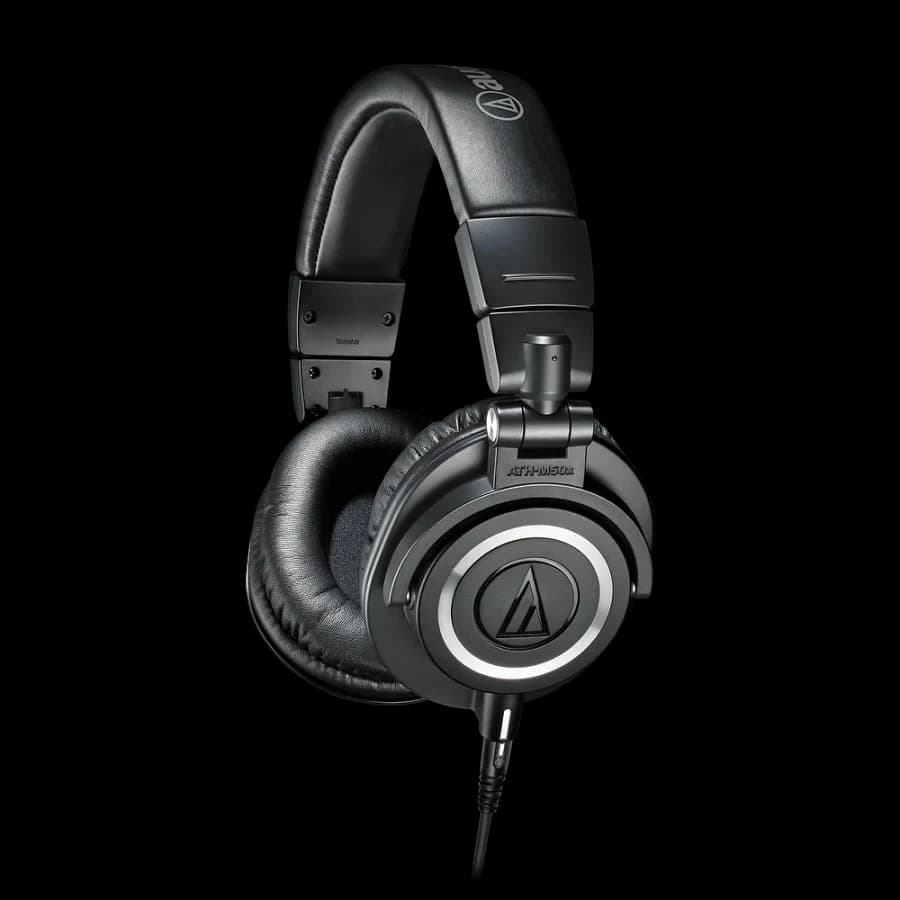
Audio-Technica ATH-M50x
- Design
- Closed · dynamic
- Impedance
- 38 Ω
- Weight
- 285 g
- Published range
- 15–28,000 Hz
- Cable
- Detachable · 3 included cables
- Price checked
- From $159
The M50x makes its case through useful physical design: folding construction, swivelling earcups and three supplied cables, including a short straight lead. For a producer moving between a laptop bag, a shared room and recording sessions, those details can matter more than a small upgrade in published specifications.
The checked US page starts at $159; colours and editions can cost more. The 285 g weight sits between the lighter Sony and the larger Beyers. Our recommendation is about versatility and value, not a claim that its response is perfectly flat. Audition the ear opening and pad seal, especially if you wear glasses.
- Folds for transport
- Short, long and coiled cables
- Useful price-to-feature balance
Closed pads can feel warm; confirm the fit before committing to all-day use.
Our take: The shortlist’s practical all-rounder for producers who need their setup to travel.
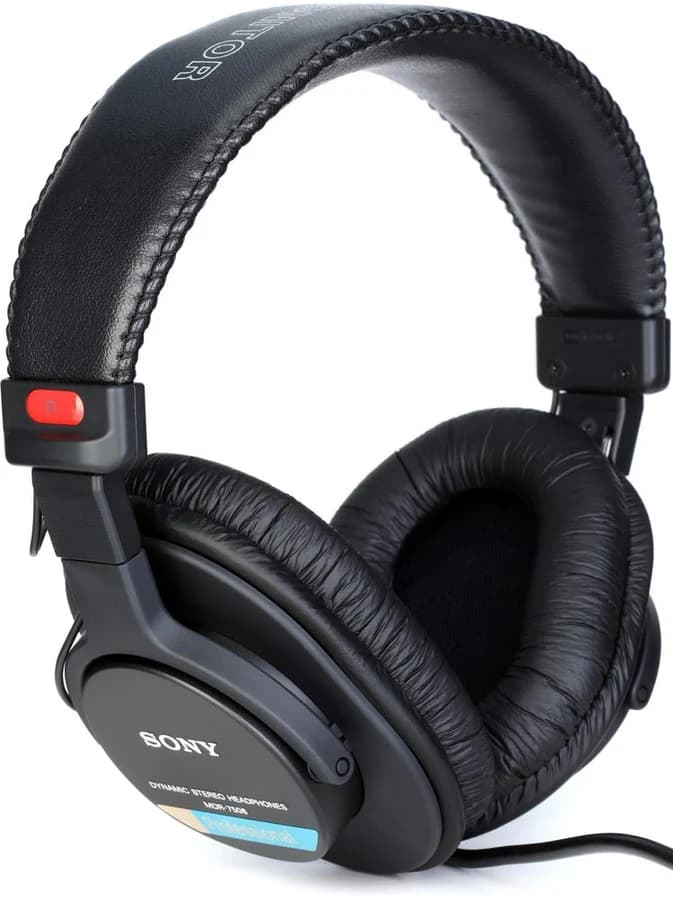
Sony MDR-7506
- Design
- Closed · dynamic
- Impedance
- 63 Ω
- Weight
- Approx. 230 g
- Published range
- 10–20,000 Hz
- Cable
- Fixed · coiled
- Price checked
- $113
At the checked $113 price, the MDR-7506 is the least expensive option here. Its folding design and approximately 230 g weight make it a reasonable starting point for tracking, editing and general production without committing several hundred dollars to the monitoring chain.
The main design compromise is the attached coiled cable. It is convenient at a desk, but a damaged lead is not the quick unplug-and-replace job offered by the other picks. Budget for pads over time and do not buy it on the assumption that a familiar studio model removes the need to learn how your mixes translate.
- Lowest checked price in this guide
- Lightweight folding design
- Closed earcups for recording
The fixed cable is less convenient to replace and more cumbersome in a mobile setup.
Our take: A sensible first purchase when saving money for an interface or microphone matters more than premium features.
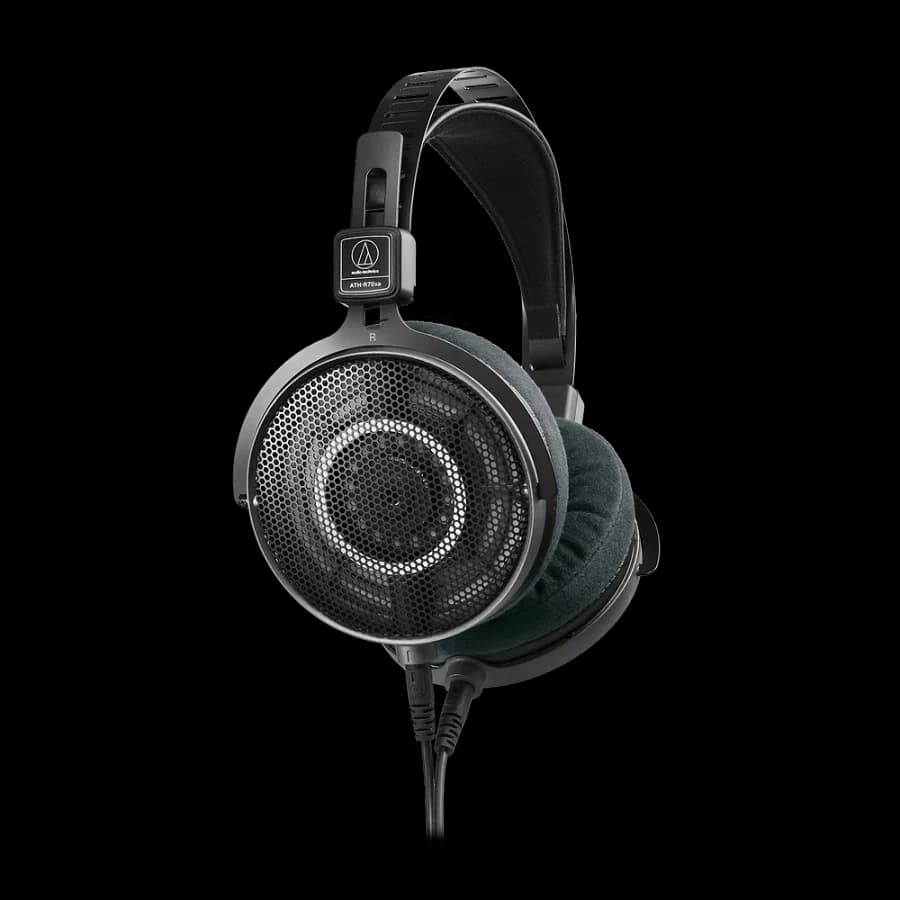
Audio-Technica ATH-R70xa
- Design
- Open · dynamic
- Impedance
- 470 Ω
- Weight
- 199 g
- Published range
- 5–40,000 Hz
- Cable
- Detachable dual-sided · 3 m
- Price checked
- $379
At 199 g without its cable, the ATH-R70xa is the lightest headphone in this comparison. Replaceable velour pads, a revised headband and an open construction make it worth considering when the physical weight of headphones is the thing that ends your sessions early. Fit still matters: a scale cannot measure pressure around your ears.
Check the headphone output before ordering. Audio-Technica specifies 470 ohms and 97 dB/mW sensitivity, so available voltage matters more than it does with the lower-impedance dynamic options here. A separate amp is not automatically required, but a weak output may leave too little headroom. This is the updated R70xa, not the older R70x.
- Lightest model here at 199 g
- Replaceable pads and headband
- Detachable locking cable
Higher voltage demand makes interface matching more important; the dual-sided cable may not suit everyone.
Our take: A compelling alternative to the HD 490 PRO if low weight is your priority and your output can drive it.
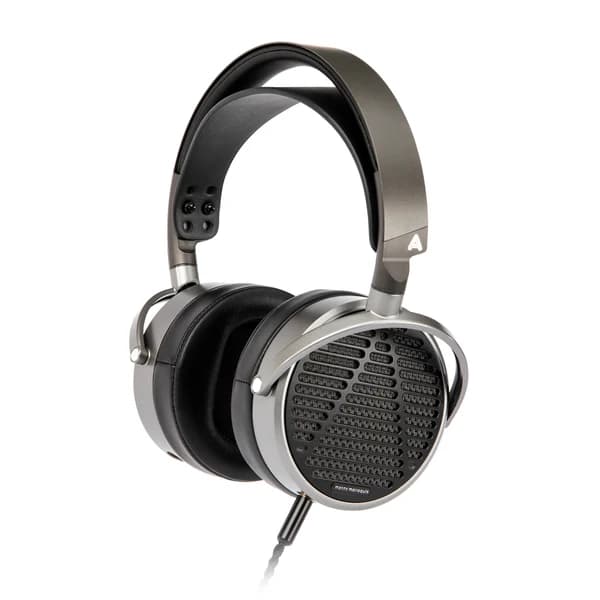
Audeze MM-100
- Design
- Open · planar magnetic
- Impedance
- 18 Ω
- Weight
- 475 g
- Published range
- 20–25,000 Hz
- Cable
- Detachable · connects on either side
- Price checked
- $299
The MM-100 offers a different driver design at a surprisingly competitive checked price: $299 on Audeze’s US store. Its 90 mm planar magnetic drivers, suspension strap and magnesium-and-steel construction make this an interesting alternative to the dynamic open backs. Planar technology alone does not establish that it will produce more accurate mixes.
The tradeoff is physical: 475 g is more than twice the R70xa’s weight. Also, do not read 18 ohms as proof that any headphone jack will be enough. Audeze specifies a minimum recommended amplifier power above 100 mW and recommends above 250 mW. Check output capability at a comparable load, especially if you use corrective EQ with extra headroom.
- Competitive current price for a studio planar
- Cable can enter either earcup
- Metal chassis and suspension strap
Heaviest option here; amplifier capability and long-session fit need particular attention.
Our take: Worth auditioning for a desk-based setup if you accept the weight and have a suitable headphone output.
How to choose for your studio
Open or closed: choose the job first
Open headphones allow sound to pass through the earcups. That makes them a poor match for a microphone session or a noisy shared room. Closed headphones reduce leakage and outside noise, but the seal varies with fit, pads and glasses. Neither construction guarantees a neutral response. For tracking, test with the actual microphone and backing-track level before recording a full take.
Impedance is only part of the amplifier question
Look at sensitivity as well as impedance, then compare those requirements with your interface’s output specification. Be careful with units: dB SPL per volt and dB SPL per milliwatt are different measurements. The R70xa’s 470-ohm load and the MM-100’s 18-ohm load illustrate why one simple impedance rule cannot cover every headphone. Try your current interface first; buy an amplifier to solve a demonstrated lack of clean headroom, not to satisfy a price-tier expectation.
Comfort is a specification you have to try
Weight is useful for narrowing the list, but pad opening, headband pressure and weight distribution decide how a pair feels after an hour. Wear your usual glasses during an audition. Move your jaw and head, check that the seal stays consistent and notice whether a cable pulls on one earcup. If you cannot audition locally, compare the seller’s return conditions before buying.
Buy the maintenance plan, too
Look up replacement pads and cables before checkout. Worn pads change the fit and ear-to-driver distance; changing to a different material can change the sound. Budget for like-for-like replacements if you want a familiar monitoring reference. A detachable cable is useful, but a proprietary connector still means checking availability and price. The cheapest purchase is not always the cheapest pair to keep working for five years.
Spend against a bottleneck
- Around $115: the MDR-7506 leaves more budget for the rest of the recording chain.
- Around $160–$230: choose the M50x for transport or the DT 770 PRO X for a recording-focused setup.
- Around $300–$320: compare the MM-100’s weight and amplifier needs with the DT 900 PRO X’s serviceable dynamic design.
- Around $380–$430: the R70xa and HD 490 PRO justify consideration through weight and ergonomics, not an automatic improvement in your finished tracks.
Make the headphones earn their place
Before replacing your headphones, build a small reference playlist in the style you actually produce. Compare kick-to-bass balance, vocal level, cymbal brightness and reverb tails at similar perceived loudness. Familiarity is useful: a new headphone can make different choices feel exciting without making them more transferable.
Check a finished mix on another playback system and in mono. Headphones do not recreate the acoustic interaction of two loudspeakers in a room, and stereo width can be misleading. Use any correction or room-simulation processing in the monitoring path and verify that it is excluded from the exported master. An audition with your own unfinished session often reveals more than another hour of spec-sheet comparison.
How we made these picks
We compared seven wired, over-ear models across recording suitability, physical design, published electrical requirements, replaceable parts and checked US pricing. The shortlist covers entry-level recording through dedicated open-back mixing, rather than assigning one winner to every situation. Award labels express editorial judgement within this shortlist; they are not laboratory rankings.
Specifications come from manufacturer product pages and manuals. Prices come from the linked manufacturer stores or Sweetwater where a clear US retail listing was available. We checked the exact PRO X and R70xa variants, rather than copying specifications from their older namesakes. We have not conducted a level-matched listening comparison, measured frequency response or tested long-term reliability on these units.
This is a selective guide, not a claim that every 2026 release has been tested. Other candidates include the more linearly tuned DT 700 PRO X and Sennheiser’s newer closed-back HD 480 PRO. The former is worth comparing if mixing and tracking must share a single pair; the latter expands the higher-priced closed-back options. Neither is excluded because we measured it performing worse.
We prioritise actionable differences over unverified claims of perfect neutrality. These recommendations should be revisited when price, availability or product revisions change. Purchase buttons take you to external sellers; the listed price is a dated reference, not an offer from audionode.
A few common questions
What are the best headphones for music production in 2026?
Our overall choice for a quiet mixing setup is the Sennheiser HD 490 PRO, based on its weight, pad options and replaceable parts. For recording, start with the closed-back DT 770 PRO X. For a smaller budget, consider the Sony MDR-7506. The right choice depends on whether you need isolation, portability or a dedicated mixing reference.
Can I mix with closed-back headphones?
Yes. Learn their response with reference tracks and check your mixes on other systems. Closed backs can be the more useful choice when you also record into microphones or work around other people. Open backs are an option for quiet mixing environments, not a prerequisite for a good mix.
Do studio headphones need a separate amplifier?
Not always. Many audio interfaces already have a suitable headphone output. Check impedance, sensitivity and the interface’s rated output together. The R70xa deserves particular attention to voltage headroom; Audeze publishes power recommendations for the MM-100. Add an amp if the existing output cannot provide the clean level and headroom you need.
Are Bluetooth headphones suitable for producing music?
They can be useful for checking how a track sounds on everyday playback, but a direct wired connection is the simpler starting point for recording and playing instruments in real time. Wireless latency and processing vary by device and mode. All seven picks here use a wired connection.
Does a wider frequency range mean better headphones?
No. A stated range does not describe the shape of the response within that range, and manufacturers may use different tolerances. Use the range as a specification, not a score. Fit, response consistency, distortion and familiarity with reference music are more useful considerations than the largest printed numbers.
Sources & further reading
Original specifications, manuals and price listings used in this guide.
- Sennheiser HD 490 PRO specifications
- Sweetwater: HD 490 PRO price
- beyerdynamic DT 900 PRO X
- beyerdynamic DT 770 PRO X
- beyerdynamic closed-back comparison
- Audio-Technica ATH-M50x
- Sony MDR-7506 specifications
- Sony MDR-7506 manual
- Sweetwater: MDR-7506 price
- Audio-Technica ATH-R70xa
- Audeze MM-100
- Sennheiser HD 480 PRO